
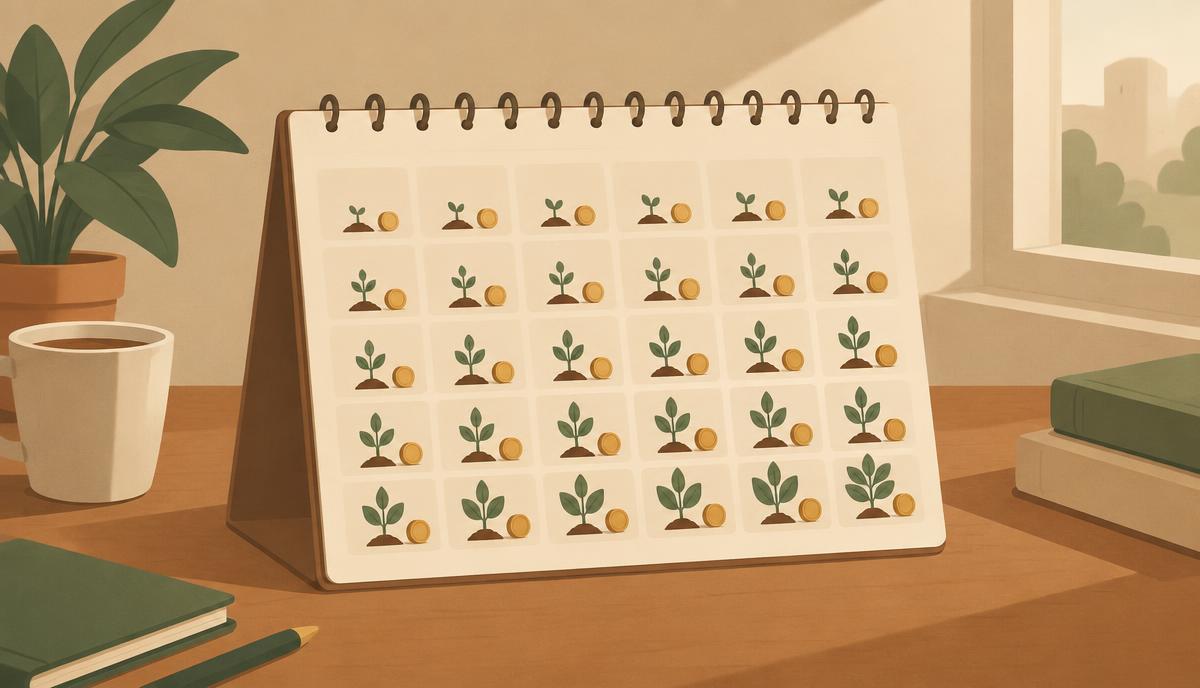
Here is the uncomfortable truth about good habits: you cannot build them when you need them.
A habit built during a crisis is not a habit — it is panic wearing a costume. The diet that starts on Monday. The budget that starts next month. Real habits are built in the boring, uneventful months when nothing is going wrong. That is exactly why almost nobody builds them.
When habits actually form
Childhood. Before a child ever earns a rupee or a dirham, they have watched money being handled a thousand times. Calm money handling produces calm adults. Secretive, stressful money handling produces adults who avoid their banking app. The first classroom is the kitchen table.
The first salary. Nothing in life feels more like wealth than the first paycheque. The habits formed in that first year — how much goes out the door, whether anything stays — tend to persist for decades. Not because they are right, but because they are familiar.
The first big responsibility. A marriage, a child, a business. This is where most people try to build habits — under maximum pressure, with maximum noise. Some manage it. Many just learn to cope.
Why the boring months matter most
A habit is a decision you stop having to make. Check the balance every Sunday. Move a fixed amount aside on payday. Ask what everything in the month actually was. None of these feel heroic. That is the point — habits are supposed to be unremarkable.
The people who look financially effortless almost never had a dramatic moment. They had a small routine, repeated in months when nobody was watching, long before it was tested.
If you never built them — read this part
It is genuinely not too late, but the entry point is not motivation. It is visibility. You cannot build a routine around numbers you do not know.
So the sequence is always the same, at 17 or at 47:
- See what is actually coming in and going out.
- Pick one small, boring routine you can survive a bad month with.
- Repeat it until it stops feeling like a decision.
Why this matters to us at Hisaab
We built Hisaab because step 1 is where almost everyone is stuck. Money scattered across accounts, personal quietly bleeding into business, statements nobody opens — you cannot form a habit around a picture you cannot see.
Put everything in one honest place, and the boring monthly routine becomes five minutes instead of an afternoon. The habit was never the hard part. Seeing clearly was.