
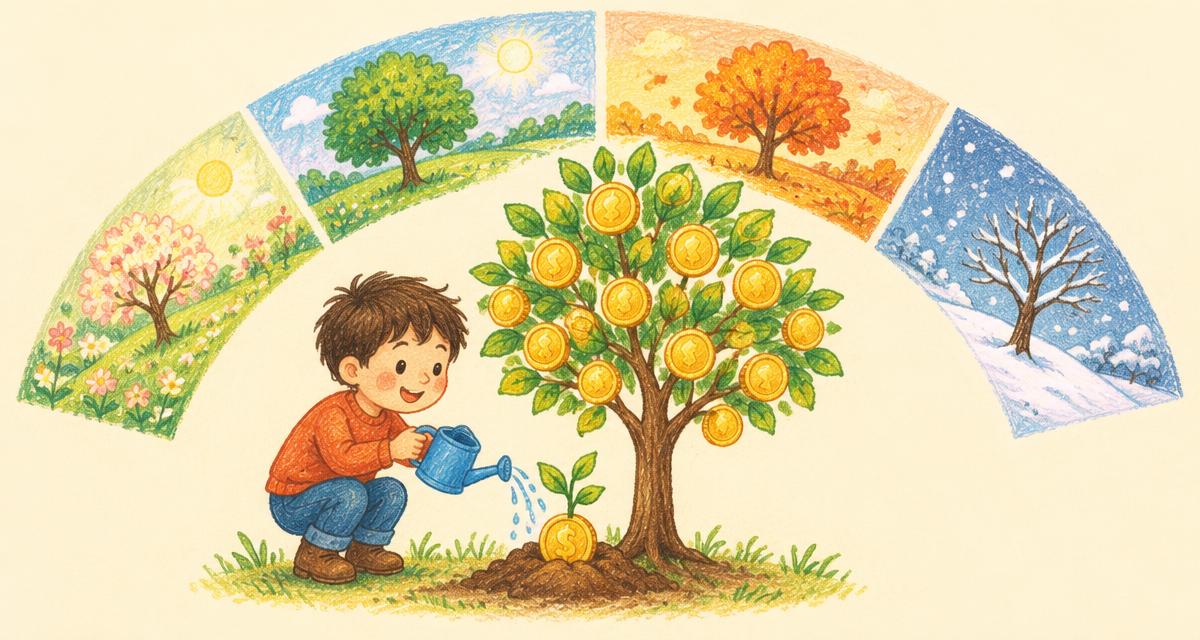
You can do two things with a coin.
You can eat it — swap it for something that is finished quickly. A sweet. A ride. A packet of crisps. Lovely, but gone.
Or you can plant it — put it somewhere it stays and quietly grows.
Both are allowed. Wise people just make sure some coins get planted.
How a coin grows
When you leave money in a bank or a proper savings account, the bank pays you a little extra for leaving it there. It is called interest. It is not much at first. A few coins for every hundred, each year.
Here is the interesting part: the following year, you earn a little extra on the extra as well. And then on that. The pile starts pushing itself uphill.
Grown-ups call this compounding. You can call it the snowball.
Time is the secret ingredient
The snowball needs a long hill. That is why starting young is a superpower that grown-ups cannot buy back.
A child who plants a small amount every month from age ten ends up ahead of an adult who plants a much bigger amount from age forty. Not because the child was cleverer. Because the child had more time.
You have more time than almost anybody reading this. That is a real advantage, and it is free.
Three rules for planted coins
- Do not dig them up. A planted coin you keep checking never grows.
- Add to the pile on the same day each month. Boring beats brilliant.
- Know what it is for. A pile with a purpose survives temptation.
Try this today
Look at your saved points and money in your kids zone. Pick a number you will not touch — even a tiny one — and give it a name, like my long pile.
Then tell your grown-up: "This part is planted. Do not let me dig it up."