
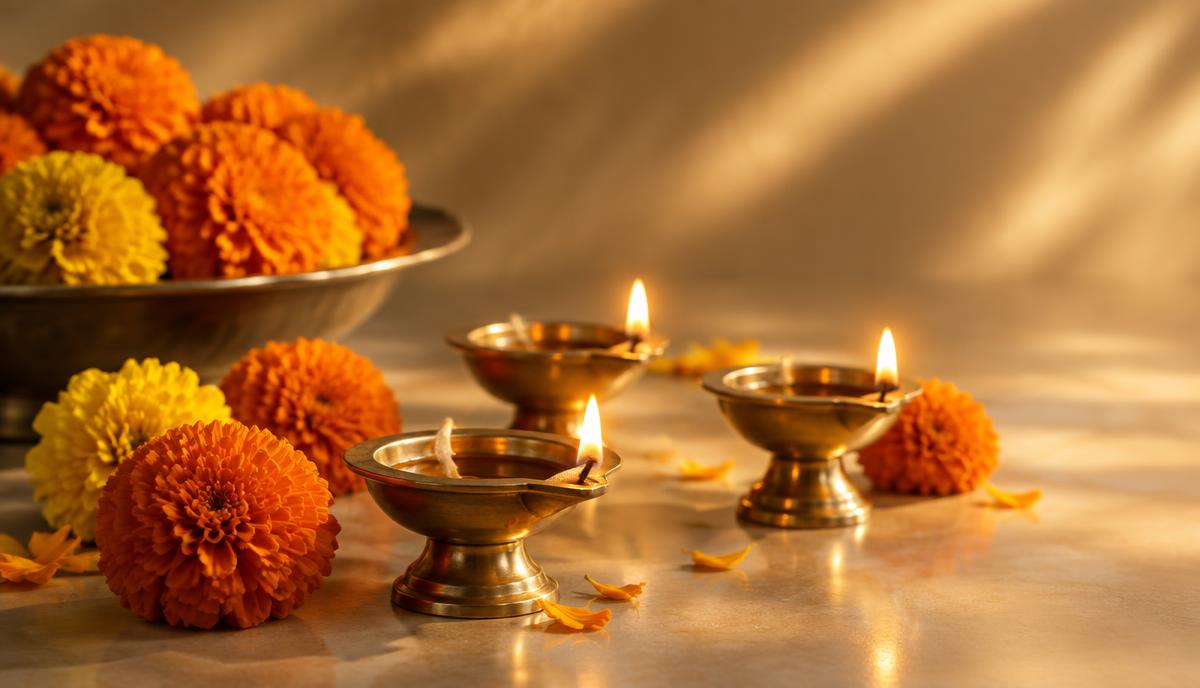
In Indian homes money is not just money. It is Lakshmi — a goddess, addressed with respect, welcomed at the door, never counted rudely or left lying on the floor.
It is easy to dismiss that as ritual. Look closer and it is one of the most practical money frameworks ever handed down, hidden inside a story so it would survive generations that could not read a balance sheet.
She is welcomed, not chased
The old instruction is never "run after wealth". It is: clean the house, light the lamp, open the door. Prepare the place, and she arrives.
Translated: money follows order. People with a clear picture of their accounts, bills paid on time and a place for savings to land, keep far more of what they earn than people with the same income and chaos. You are not chasing money. You are making a house it can stay in.
She does not stay where there is disorder
Every version of the story says the same thing — she leaves homes that are dirty, quarrelsome, or careless.
Read that as a financial rule and it is brutally accurate. Money leaves houses with unopened bills, forgotten subscriptions, silent debt, and couples who fight instead of planning. Not because of a curse. Because disorder has a monthly cost: late fees, missed dues, duplicated spending, decisions taken blind.
She is worshipped alongside knowledge
In many homes Lakshmi is honoured with Saraswati — wealth beside learning — and with Ganesha, who clears obstacles first.
The sequence is the teaching. Clear the blockage, apply knowledge, and only then does wealth make sense. Money without understanding does not survive. This is why lottery winners return to where they started, and why a modest earner who understands their own numbers slowly rises.
She is flowing water, not a locked box
Lakshmi is depicted with coins pouring from an open hand, not clutched. Wealth that circulates — invested, given, spent with intention — is treated as living. Hoarded and hidden, it is treated as dead.
The modern equivalent: money doing nothing in a forgotten account is not safety, it is stagnation. Money moving with purpose — into savings, into skill, into people — compounds in ways a locked box never will.
Respect, not fear
The deepest part is simple: money is treated as something worthy of attention and gratitude, not shame. You do not hide from a guest you respect. You do not avoid her at the door.
Most people's real relationship with money is avoidance — do not open the app, do not add it up, do not mention it at dinner. That is the opposite of everything the tradition teaches.
The ritual, in modern form
Light the lamp: look at your numbers, once a week, on purpose.
Clean the house: one place for every account, bills known before they are due.
Open the door: say clearly what you want the money for, with a figure and a date.
Keep it flowing: a fixed share saved, a share given, a share enjoyed without guilt.
None of that requires belief. It only requires attention — which, as the story has been saying for centuries, is what wealth responds to.
Hisaab is the lamp. One clear picture of the whole house, so the welcome is real and not just decorative.