
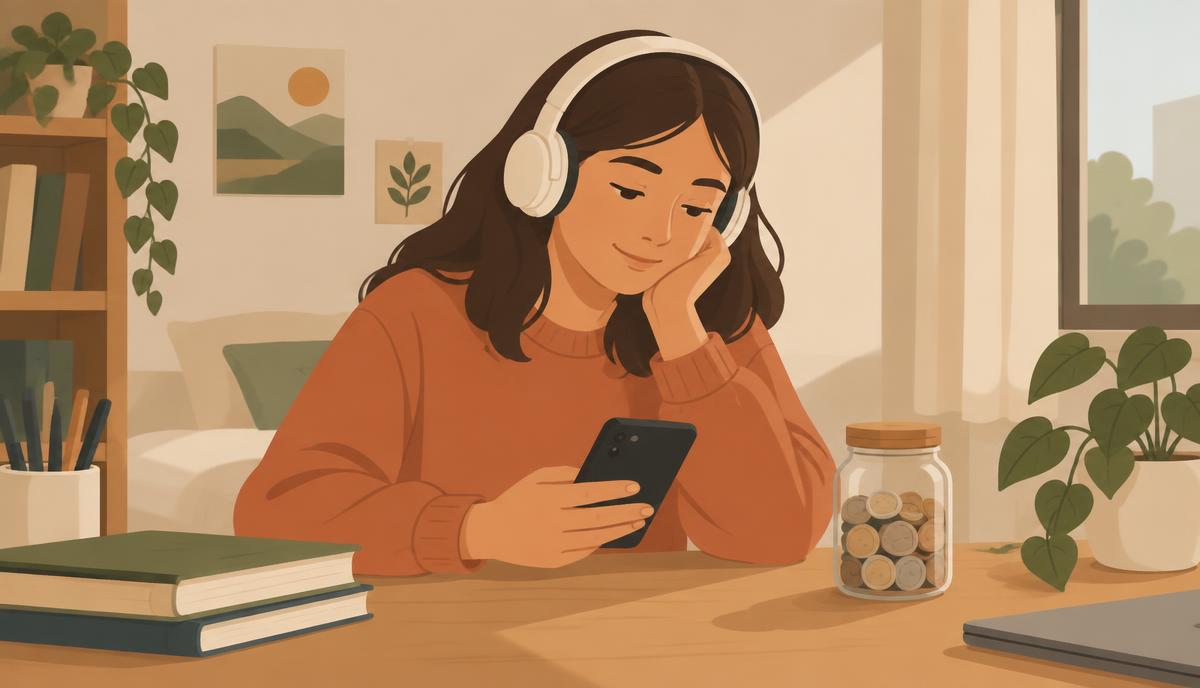
Ask a teenager about money and you will get a shrug. But watch them for a week and you will see the truth: they already have a full relationship with money. They just learned it from YouTube, from friends, from watching your face when a bill arrived.
Nobody sits a 15-year-old down and explains money. So they pick it up sideways — and the lessons they absorb at 15 run silently in the background at 35.
The lesson they are already learning
Every time a parent sighs at a card machine, every time money is a fight at the dinner table, every time a phone upgrade happens quietly without explanation — a belief forms. Money is stressful. Money is secret. Money is for showing. Money is for adults to worry about.
None of these are taught. All of them are absorbed.
What is actually worth teaching
Not interest rates. Not stock picking. Three things:
1. Where money goes. Give them a fixed amount for the month and let it run out. The month ending with nothing teaches more than any lecture. The point is not the amount — it is the moment they see the connection between a choice and a balance.
2. Waiting. The dopamine economy is training every teenager to want it now. Saving for something over six weeks is the single most powerful financial exercise a teenager can do. It rewires the want.
3. That money is a tool, not a score. Kids who grow up thinking money measures worth become adults who spend to prove worth. Say it out loud: money buys options, not value.
The part most parents miss
Transparency teaches more than allowance. When kids see that the family knows exactly what comes in and what goes out — calmly, without drama — they learn the thing schools never teach: money is manageable.
Most households keep money vague. Vagueness is where anxiety is born.
Why this matters to us at Hisaab
We built Hisaab because adults were handed chaos — scattered accounts, mixed personal and business money, and no clear picture. Most of that chaos started young.
If your own money lives in ten places and you cannot see it clearly, your children are learning that too. Seeing your own money honestly is the first lesson you teach — without saying a word.